ADA Handicap Available Portable Restroom Rental for Inclusive Occasion Access
When people intend an event, toilet accessibility often obtains treated like a logistics line thing. It should not. For numerous visitors, the difference in between sensation welcome and sensation omitted boils down to whether they can pleasantly, securely, and individually make use of the washroom on site.
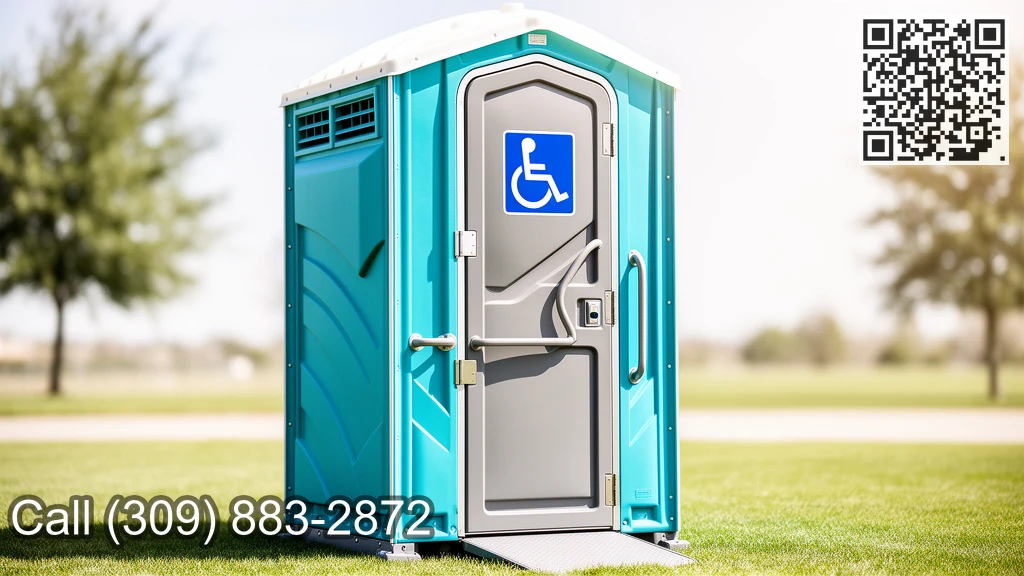
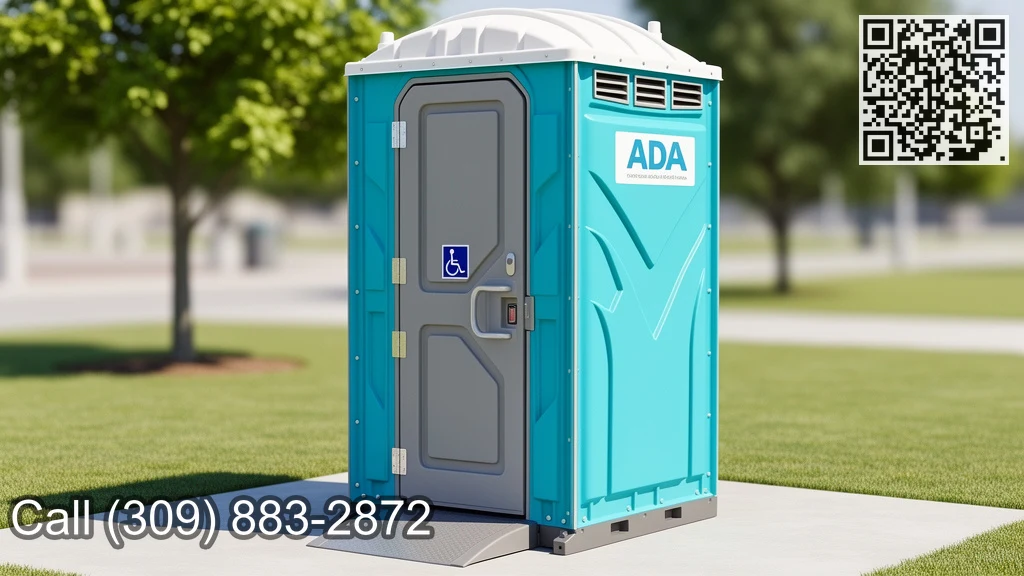
That is why an ada handicap accessible portable restroom is not a good additional. It becomes part of standard access.
I have seen this issue approached in 2 very different ways. In one case, organizers dealt with accessibility as an afterthought and added a single system late while doing so, after that put it on uneven ground beside an area. Technically, they had actually leased an ada mobile restroom, yet functionally they had not created real access. In one more instance, an occasion group begun by asking where visitors with movement impairments would certainly park, how they would certainly travel to the entry, where they would sit, and how they would certainly reach the washrooms without barriers. The restroom leasing was part of that larger gain access to strategy, and the entire occasion really felt different. It felt considerate.
That difference matters. Renting ada certified portable restrooms has to do with greater than inspecting a box. It is about ensuring an individual utilizing a wheelchair, walker, scooter, or various other wheelchair aid is not compelled to improvisate their means through a basic human need.
What the ADA needs for mobile bathroom access
For portable commode services in the USA, the regulating federal requirement is the 2010 ADA Criteria for Accessible Layout, as interpreted by the united state Access Board and the Department of Justice. For occasion coordinators and site supervisors, that suggests an available unit is not just a larger stall. It needs to meet access demands in a purposeful, technical way.
At temporary occasions and various other sites where portable single-user bathroom units are offered in a collection, at least 5 percent of the units in each cluster should come. That policy is very important due to the fact that some coordinators still presume ease of access can be handled at the location degree instead of at each bathroom location. The requirement is a lot more specific than that. If there are mobile bathroom clusters, ease of access has to be addressed within those clusters.
This is one area where language issues. Individuals might search for an ada obtainable portable restroom, ada compliant mobile toilet, or ada-compliant mobile toilet, and while those expressions audio comparable, what https://blogfreely.net/boltonejjd/h1-b-ada-portable-toilet-rental-exactly-how-ease-of-access-uses-beyond actually matters is whether the unit and its positioning please the applicable availability requirements. A supplier can market an ada portable commode rental, however the organizer still needs to make sure the unit is identified effectively, reachable by an accessible path, and set up in such a way that sustains independent use.
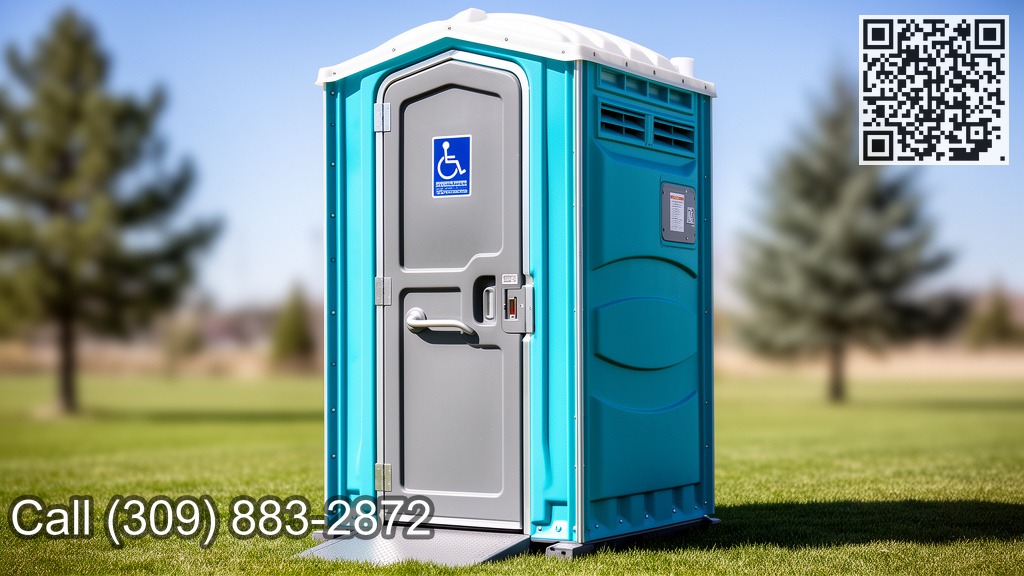
Accessible portable toilet units must also be related to the International Icon of Ease Of Access. That marking is not attractive. It aids individuals situate the correct device swiftly, particularly in big or crowded event setups where an individual may already be managing time stress, pain, exhaustion, or embarrassment.
A certified unit is only component of the picture
This is where good objectives frequently fall apart.
A website can rent the best ada-compliant mobile restrooms and still fail visitors if the bordering arrangement is incorrect. The criteria require an easily accessible route and obtainable entrance. If ramps or landings are required, those need to abide by ADA technological demands also. In other words, gain access to does not start at the door of the unit. It starts where a person initially needs to travel.
I have seen event teams concentrate intensely on stage layout, food catering flow, and signs, after that place the available toilet behind fence, over soft turf, or beyond a sloppy incline after rain. Nobody laid out to omit anyone, however exclusion can take place quietly via inadequate positioning. A guest may not grumble. They might just leave early, avoid liquids, or choose not to attend next time.
That is why an ada compliant obtainable mobile restroom has to be considered in context. The path to it matters. The ground conditions issue. The entrance issues. The handling room issues. The surrounding web traffic pattern matters. A slim void between various other devices, a short-term visual lip, or a path blocked by power cables can make the washroom unusable also if the device itself is technically the appropriate model.
What available mobile restroom design in fact involves
The technological requirements for easily accessible mobile devices are not vague. They include toilet-room needs such as fixture clearances, transforming area, door maneuvering clearances, and applicable grab-bar and water-closet clearance rules. Those details exist because accessibility depends upon actual body language and real equipment measurements, not on labels.
That factor obtains lost when people use "ADA" as shorthand for "roomier." An ada certified portable toilet is not simply a bigger box. The inside needs to sustain strategy, transfer, turning, and usage. Door steering area is not minor. Neither are clearances around the bathroom. Get hold of bars are not optional devices. These are practical components that affect whether somebody can use the washroom individually or needs aid they did not intend to need.
This is one factor experienced organizers ask far better inquiries of suppliers. Not simply "Do you have an ADA unit?" yet "Is this device intended to meet ADA access criteria for portable use?" and "What site conditions do you require from us so it works accessibly?" Those conversations tend to be much more useful than purchasing on unit dimension alone.
The 5 percent policy sounds simple, but preparation rarely is
The requirement that a minimum of 5 percent of systems in each collection be accessible sounds simple. In method, it requires organizers to believe thoroughly about how they distribute restrooms across a site.
An usual mistake is focusing all obtainable devices in one area while placing typical devices throughout the rest of the grounds. That might appear efficient from a shipment viewpoint, but it can produce long travel ranges for individuals who need the obtainable device. The scoping demand for every cluster pushes preparation in a much better instructions. If bathrooms are organized in greater than one place, accessibility needs to appear in greater than one location too.
This has functional consequences for events, fairs, races, community events, outdoor events, and other occasions with spread-out impacts. If guests can access food, seats, and amusement from numerous zones, toilet access ought to track with that said format as carefully as possible. Or else, the occasion interacts, even if accidentally, that some guests are anticipated to plan around hassle that never notice.
There is additionally a self-respect concern here. The farther away the easily accessible choice is, the more a visitor may need to request instructions, demand assistance, or leave buddies behind. Tiny preparation options can either protect privacy and freedom or chip away at both.
Placement can make or damage accessibility
If I had to name the solitary most overlooked factor in ada portable toilet requirements, it would be placement. Coordinators in some cases think that when the proper ada certified portable toilets show up, the job is done. It is not.
The course to the device needs to be easily accessible. The entry needs to be available. If a ramp or touchdown becomes part of the setup, it has to fulfill the ADA technical requirements. Those are not side notes. They are part of the whole.
This becomes specifically important at short-term occasions because the setting alters rapidly. Ground that looked company throughout arrangement can soften. A path that was open at 8 a.m. Can be obstructed by obstacles, vendor supply, or crowd control tools by midday. A system that showed up from the main course can vanish behind parked solution cars after load-in.
The finest occasion groups take another look at availability after setup as opposed to relying on the site map. They stroll the route a guest would certainly take. They seek slopes, squeeze points, puddles, and problems. They ask whether a person using a mobility device can approach, enter, maneuver, and leave without requiring somebody to constant the door or remove a path.
That practice catches issues early, while they are still simple to fix.
Why the icon matters more than individuals think
Accessible portable devices should show the International Symbol of Access. On paper, that can seem like a minor need compared to path and clearance concerns. In method, clear recognition has a direct effect on usability.
At hectic occasions, individuals typically find washrooms from a distance. If the accessible unit is not clearly significant, a visitor may waste time approaching basic devices that do not help them. In a jampacked setup, that can be stressful and stressful. It can also cause the awkward experience of needing to ask complete strangers or personnel where the easily accessible restroom is.
Good gain access to is not just regarding whether a feature exists. It is also regarding whether people can find it without friction.
The construction-site exemption is narrow
This is an area where confusion sneaks in.
There is a difference in the ADA requirements for mobile toilet units at construction websites utilized exclusively by building and construction employees. That scenario was treated differently under the cited 1991 standard. Some individuals become aware of that exemption and wrongly think mobile toilet accessibility is typically adaptable or optional.
It is not.
For basic mobile bathroom services, consisting of event usage, the accessible-unit need stays. If you are organizing restrooms for a public or guest-facing setting, it is dangerous to obtain presumptions from construction-site regulations that do not fit the scenario. I have seen intending discussions go off track because somebody vaguely bore in mind an exemption without comprehending exactly how minimal it was.
When there is any unpredictability, the safest approach is to deal with availability as a core need and verify that the system kind, quantity, and placement align with the ADA criteria that control the rental context.
Renting the best device begins with far better conversations
If you are arranging an ada mobile toilet rental, the top quality of the conversation with the supplier matters almost as long as the system itself. A great deal can be clarified before distribution if the coordinator shares honest details about the site.
A confined urban impact, a sloped park, a multi-zone festival area, and an institution charity event on sidewalk all present different accessibility difficulties. The system may be comparable, but the installation conditions are not. That is why the most helpful preparation discussions are specific. Where will the collection be situated? What surface will sustain the route? Will a ramp or touchdown be necessary? How will certainly the system be determined and kept reachable throughout the event?
The solutions do not need to be grand or technical to be effective. They need to be realistic.
Here are five concerns worth working out prior to distribution:
- How many devices will certainly remain in each collection, and does each collection fulfill the accessible-unit requirement?
- Will guests have the ability to get to the system by an obtainable route from the occasion's major obtainable areas?
- Is the entryway set up accessibly, consisting of any ramp or touchdown that might be needed?
- Is the unit clearly understood the International Symbol of Accessibility?
- Has a person strolled the actual course and inspected conditions after configuration, not simply on paper?
That brief list conserves a shocking quantity of trouble.
Accessibility is part of hospitality
There is a tendency to talk about conformity in a completely dry, protective means. That misses the human reality. For guests who require an ada easily accessible portable restroom, toilet access affects whether an occasion really feels feasible at all.
Some guests intend around pain, power limitations, transfer needs, or wheelchair tools whenever they leave home. They notice details others miss because those information can derail a getaway. A poorly placed toilet can turn a family celebration into a stressful endurance examination. A well-planned one can allow someone to unwind and remain longer.
I remember a neighborhood occasion where the available toilet placement was managed specifically well. It was not hidden off sideways, and it was not established thus far apart that it seemed like a different accommodation. It was merely incorporated into the main event flow, easy to discover, and convenient. No one made a speech about it. Nobody needed to. The setup quietly interacted that impaired guests were anticipated and welcomed.
That is what thoughtful preparation does at its finest. It gets rid of the need for individuals to request special delivery in the initial place.
Broader enforcement makes this worth taking seriously
Accessibility compliance is not becoming less appropriate. If anything, it is being implemented within a more comprehensive conformity environment across fields. One recent instance is the Department of Justice advice extending a web and mobile ease of access deadline for state and city governments to April 26, 2027 for bigger entities. That update has to do with digital access, not portable bathrooms, but it reflects a broader truth. ADA compliance stays active, noticeable, and consequential.
For event organizers, municipalities, locations, and service providers, the lesson is straightforward. Accessibility needs to not be dealt with as a single documents workout or a low-priority procedures detail. It belongs in regular planning, contracting, setup, and last walkthroughs. The companies that do this well usually are not responding to one narrow policy. They have established the routine of asking, very early and consistently, whether impaired individuals can actually use what is being offered.
That state of mind has a tendency to boost more than compliance. It boosts trust.
Common judgment calls at real events
Not every website offers clean problems. Short-term events typically entail concessions, weather shifts, limited distribution windows, and competing demands for room. That is precisely why judgment matters.
Sometimes the most effective washroom location for basic crowd circulation is not the most effective one for easily accessible transmitting. Often a cluster requires to be moved better to secure access paths also if that makes complex solution logistics. Often the accessible device ought to be much more central, not much less, because a long detour creates an obstacle nobody intended. These are not abstract problems. They come up constantly.
The right solution is hardly ever the one that is simplest only for configuration crews. It is the one that preserves useful accessibility for attendees who rely on it.
An organizer does not need to end up being a legal professional to make better choices. However they do require to stop thinking about the ada-compliant mobile toilet as a stand-alone things. It becomes part of an experience. If the route is blocked, if the entrance is wrong, or if the unit is hard to locate, the visitor does not experience accessibility. They experience a problem.
A much better basic for inclusive events
Inclusive occasion accessibility is constructed through regular choices made thoroughly. Bathroom services are just one of those choices. When planners give ada compliant accessible mobile restrooms that are appropriately counted, effectively marked, and correctly positioned, they do greater than fulfill a requirement. They minimize anxiety, protect self-respect, and make participation feasible for more people.
That deserves taking seriously.
An ada handicap easily accessible mobile restroom must never be dealt with as a symbolic gesture parked somewhere on site. It should be chosen and mounted with the exact same level of purpose that enters into entrances, seating, and flow. At short-lived events, availability lives or passes away in the details, the course, the entry, the turning space, the clearances, the visibility, the cluster layout.
If your event includes portable restrooms, after that washroom access is part of the event experience you are responsible for. Fortunately is that this is one location where thoughtful planning goes a long method. A well-handled ada portable restroom arrangement tells guests something important without a solitary announcement: you prepared for them to be here.
 Ask ChatGPT
 Ask Grok
 Ask Perplexity
 Ask Claude
 Ask Google AI
 Ask You