ADA Portable Toilet Requirements for Collections of Single-User Units
If you have actually ever been the person responsible for restroom preparation at an event, a momentary work site, or a public event, you currently know exactly how very easy it is to obtain drawn into the weeds. Individuals have a tendency to concentrate on the visible inquiries initially: how many units, where they go, how usually they need solution. Access often obtains increased later on, sometimes far far too late, when the vehicle is currently scheduled and the site map is locked.
That is usually when the actual stress and anxiety begins.
With collections of single-user portable commode units, the essential ADA mobile bathroom demands are not mysterious, but they do call for attention. The controlling federal standard in the United States is the 2010 ADA Standards for Accessible Layout, as analyzed by the united state Gain Access To Board and the Division of Justice. For portable bathroom collections, the functional headline is clear: at the very least 5 percent of the units in each collection have to be accessible, and the Accessibility Board has made clear that this applies even at temporary events.
That one sentence responds to the very first concern people ask, yet not the tougher questions. What counts as a collection? What does "available" actually call for in the area? What takes place when a site is uneven, sloppy, jampacked, or put together in a rush? And what errors cause one of the most trouble?
The 5 percent guideline is the beginning point, not the finish line
When people listen to "5 percent," they often treat it like the entire work. It is not. It is scoping, which implies it informs you how many systems in a collection should be accessible. It does not inform you that any type of larger-looking system will certainly do, and it does not indicate you can position the device wherever there happens to be space.
For collections of mobile single-user toilet devices, at the very least 5 percent of the systems in each collection have to be accessible. If you are preparing mobile washrooms at a celebration, a fairground, a sporting activities event, or one more short-term arrangement, that requirement still applies. The fact that the event is short-lived does not get rid of the obligation.
This captures individuals off-guard more frequently than you may think. I have seen organizers do a careful matter for the overall website, then put all of the available units in one corner since that was simpler for shipment. That might seem reliable, but it misunderstands of using the need per cluster. If your mobile bathrooms are spread out into a number of separate financial institutions, you need to assume cluster by cluster, not simply site-wide in the aggregate.
That distinction matters since ease of access is not almost whether an ada easily accessible portable washroom exists someplace on the building. It has to do with whether people can utilize bathroom facilities in a manner that is meaningfully comparable to everybody else.
What an easily accessible unit needs to provide
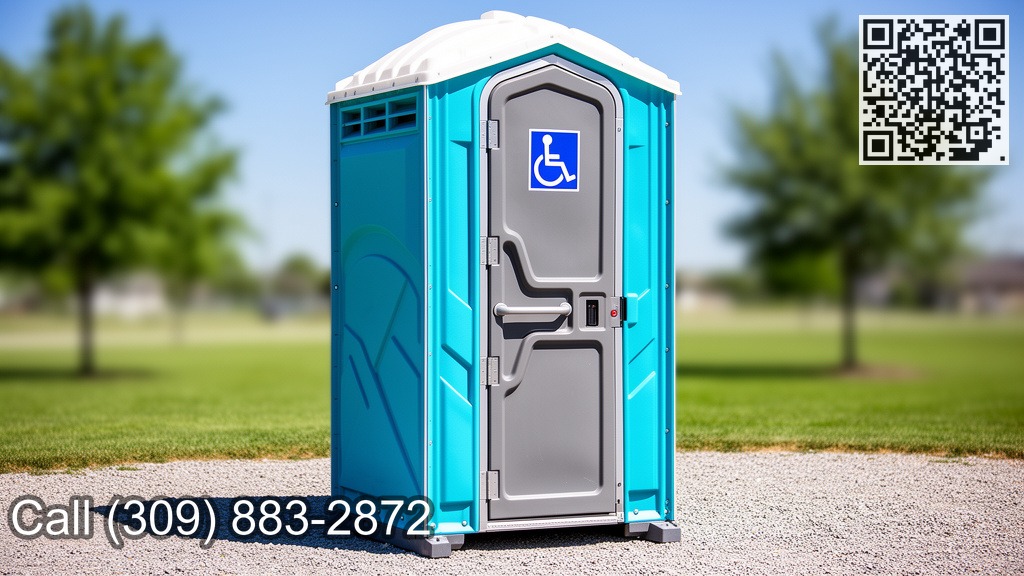
An ada compliant mobile bathroom is not defined by size alone. The system needs to fulfill toilet-room technical requirements, including fixture clearances, turning room, and door handling clearances, together with appropriate grab-bar and water-closet clearance guidelines. It also needs to be related to the International Icon of Accessibility.
That means a provider can not merely supply a roomier device and call it an ada compliant accessible mobile washroom unless it in fact pleases the access criteria. In practice, this is where knowledgeable rental companions issue. The language "ADA certified mobile restrooms" gets used loosely in advertising, and that can develop an incorrect sense of security for the tenant. If the unit is being represented as an ada compliant portable washroom or an ada-compliant portable commode, the details behind that label matter.
The sign matters also. Accessible mobile toilet devices should be identified with the International Icon of Ease Of Access. That sounds standard, however it serves a real function. When a group is moving, people require to be able to locate the available device quickly, without presuming which bigger box may be the ideal one.
There is also a human side right here that is easy to miss. When the only available device is poorly marked, obstructed by a garbage can, or buried behind a group barrier, it sends a message, also if no one meant it. Availability failures are usually seasoned not equally as aggravation, but as exclusion.
The course to the unit matters as long as the unit itself
One of the most typical preparation mistakes is dealing with the washroom device itself as the entire conformity tale. It is not. A portable easily accessible device should have an available path and entry, and any needed ramps or touchdowns should abide by ADA technical requirements.
That indicates the trip matters.
A really ada handicap easily accessible mobile bathroom can not rest on top of an improvisated incline, across deep gravel, or behind a lip that makes access tough or difficult. If an individual can not reach the door or can not come close to and enter it properly, the unit might exist on paper, but it does not operate as obtainable in the real world.
This is where short-lived setups can become complicated. Event sites are often picked for convenience, views, or crowd circulation, except perfect ground conditions. Open fields, parking area, fairgrounds, and pop-up venues commonly include soft https://elliottknlh398.publishlane.com/posts/ada-certified-accessible-mobile-bathrooms-conformity-tips-based-upon-federal-policy surface areas, irregular qualities, or traffic jams created by secure fencing and equipment. Mobile toilet planning should happen alongside the website accessibility plan, not after everything else has been laid out.
I have actually watched teams do heroic last-minute adjustments, relocating an ada portable commode a couple of feet at once to find workable gain access to around wires, energy boxes, and secure fencing. Sometimes they made it function. Often they lacked great alternatives due to the fact that the remainder of the website had actually already been established. The lesson is simple: the obtainable route should be part of the preliminary positioning choice, not an afterthought chosen distribution day.
Temporary does not imply exempt
This is just one of one of the most consistent misconceptions in the field. People presume that if the configuration is short-lived, the rules must be softer. For clusters of portable single-user bathroom systems, the Accessibility Board has stated the 5 percent accessible-unit need applies also at short-lived events.
That has functional effects for fairs, area events, weekend events, outdoor ceremonies, and various other short-duration uses. A momentary occasion may have momentary infrastructure, yet that does not erase availability obligations.
There is a reason this misconception lingers. Momentary tasks move fast. A committee might be composed of volunteers. A basic site contractor might not concentrate on access. A mobile toilet rental order might obtain placed by someone concentrated mainly on count and budget plan. In that atmosphere, information obtain compressed. The safest habit is to presume availability planning belongs in the initial discussion, not the last one.
The construction-site wrinkle that triggers confusion
There is one nuance that routinely creates blended messages on the market. The ADA Standards differentiate mobile bathroom systems at building and construction sites made use of specifically by building personnel. In the pointed out 1991 requirement, those systems are excluded from the portable-toilet availability scoping requirement.
That exemption is narrow, and it must not be stretched beyond its context.
For basic mobile commode rentals, the accessible-unit demand remains. If a provider or organizer begins discussing construction-site exemptions in a context that includes public accessibility or general-use mobile restrooms, that must motivate a closer look. The presence of a restricted exception for certain building and construction workers does not clean away the wider guideline for common rental situations.
This is among those locations where words like "task website" can muddy the waters. Some momentary arrangements occur near building and construction activity, however that does not automatically make every bathroom on the site exempt. The use situation matters.
Cluster-by-cluster planning modifications genuine decisions
The phrase "each collection" is very easy to skim previous, but it needs to shape how you lay out a site.
Imagine a large event with bathrooms divided between a main entryway location, a food court, and a back activity area. If you count all devices together and place the available ones only at the entrance, you may satisfy your own spread sheet reasoning while failing the cluster-based strategy. People ought to not need to take a trip to another washroom bank, and potentially across a jampacked or challenging route, simply to locate the easily accessible option.
That is why the matter is only one layer. Circulation matters.
A great useful routine is to ask a couple of plain-language inquiries before the order is completed:
- How numerous separate restroom clusters will the site actually have?
- Does each cluster include the needed available units?
- Can an individual reach each obtainable unit on an obtainable route?
- Is the easily accessible system plainly understood the International Sign of Accessibility?
- Has anyone inspected the final placement after fences, phases, cords, and obstacles are installed?
That brief checklist solves a shocking variety of problems prior to they come to be expensive or embarrassing.
Marketing language is not a conformity review
The portable hygiene industry makes use of a lot of comparable phrases: ada mobile toilet, ada portable toilet, ada compliant mobile bathrooms, ada-compliant portable bathrooms, and so forth. Those phrases can be beneficial when looking stock, but they should not finish the conversation.
An item listing or a fast sales description is not the very same point as verifying compliance on the ground. The lawful and technological needs include more than a broad tag. The system should please the relevant toilet-room technological demands and need to be placed to make sure that people can in fact accessibility and use it.
This is particularly important when a person is arranging an ada portable bathroom rental under time stress. If you are attempting to resolve a final need, it is tempting to think the vendor's terms responses everything. In truth, you desire clarity on three fronts: the unit itself, the marking, and the course to it. If any among those items is missing out on, the arrangement may fall short.
I have actually found that one of the most effective discussions with suppliers are the most specific ones. Not "Do you have ADA systems?" but "We have 3 restroom collections, we require the accessible systems distributed accordingly, we need an obtainable path to each one, and we require the systems identified correctly." Details requests have a tendency to generate much better outcomes than generic ones.
Why positioning blunders happen so often
Most ease of access failings with portable toilets are not driven by negative intent. They generally come from fragmented decision-making.
One individual orders the toilets. Another individual notes the distribution map. A third individual manages obstacles, hosting, and energies. A fourth person makes adjustments the morning of the occasion. By the time the public gets here, the available device may technically be present but functionally compromised.
Maybe the obtainable route is interrupted by a wire guard. Possibly the door swing area is pinched by a fence panel. Possibly the device was put in a low location that transforms soft after rain. Possibly the sign is there, however the line of view is obstructed by crowd-control equipment.
These are common area issues, which is precisely why they require common field attention. Access preparation functions best when it is folded into the very same practical review as maintenance accessibility, truck placement, handwashing places, and crowd flow.
The more comprehensive conformity environment is not getting quieter
Even when a project is concentrated on something as physical and instant as portable bathrooms, it assists to identify the broader instructions of ADA enforcement. A 2026 development worth noting is the Division of Justice support that prolonged the due date for state and city government internet and mobile ease of access policies to April 26, 2027 for bigger entities. That is not a mobile bathroom guideline, but it shows something vital: availability conformity is active across markets, not fading into the background.
For planners, location drivers, towns, and occasion organizers, the lesson is less about web sites and even more about stance. Access is being treated as an ongoing functional responsibility. Mobile washroom conformity sits inside that larger society of accountability.
That is one factor it makes good sense to develop a repeatable procedure rather than dealing with each arrangement as a fresh shuffle. If your group rents mobile toilets regularly, produce interior behaviors around cluster counts, obtainable course evaluation, and last positioning checks. Those behaviors save time, minimize friction with vendors, and make the website job much better for real people.
What profundity resembles on the ground
Good judgment in this field is seldom flashy. It generally appears like somebody decreasing enough time to notice the noticeable. Is the accessible unit in the same practical solution area as the remainder of the cluster? Can somebody reach it without detouring with a rough course? Is the entrance functional under real event conditions, not just in the clean illustration version of the website? Is it clearly marked?
Those questions audio basic because they are simple. The challenge is asking them early enough.
There is also a more comprehensive way of thinking shift that aids. Do not assume of an ada compliant mobile bathroom as a specialized add-on for a handful of participants. Consider it as a basic part of bathroom preparation whenever mobile single-user units are clustered for public or basic usage. That framing adjustments just how choices obtain made. It relocates access out of the exception lane and into typical procedures, where it belongs.
A far better way to come close to the rental conversation
If you are coordinating an ada portable bathroom leasing, the cleanest technique is to treat access as part of range, not a footnote. Inform the vendor the amount of clusters you have, not simply the amount of overall devices. Recognize the intended placement areas. Review course conditions before shipment, specifically if the website is temporary, unpaved, or still incomplete. Verify that the obtainable units will certainly be related to the International Symbol of Availability. After that walk the last design as soon as other site components remain in place.
That last action matters more than many individuals recognize. A design can be compliant in idea and jeopardized in execution. A final site stroll catches the little changes that take place in the field.
This is also where compassion matters. For numerous guests, employees, or attendees, a bathroom is not a minor amenity. It forms whether they can comfortably remain on website, participate totally, or attend in any way. When easily accessible mobile bathrooms are placed thoughtfully, significant clearly, and reached conveniently, they fade right into the history, which is normally the indicator that planning was succeeded. People can merely use the facility they require and move on with their day.
That is the goal.
The practical bottom line
For clusters of single-user portable bathroom systems, the government ADA framework is uncomplicated in its essentials. At the very least 5 percent of the units in each collection need to be accessible, consisting of at temporary occasions. The accessible units need to be related to the International Icon of Accessibility. They need to have an obtainable path and entry, and any type of needed ramps and touchdowns need to adhere to ADA technological requirements. The units themselves should satisfy toilet-room technical needs, including clearances, transforming area, door maneuvering clearances, and applicable grab-bar and water-closet clearance rules.
Everything past that is execution.
If you remember only one thing, remember this: an ada mobile toilet is only absolutely helpful when the count, the device, the course, and the placement all work together. That is what transforms a rental order into genuine access.
 Ask ChatGPT
 Ask Grok
 Ask Perplexity
 Ask Claude
 Ask Google AI
 Ask You